We love Venice, and think that the more time you can spend here the better.
The city is more compact than Rome, Florence or Naples, but don’t let that fool you — Venice folds an extraordinary density of beauty, history and strangeness into its modest footprint, and you could spend weeks wandering its labyrinth of canals and alleys without seeing the half of it.
Ideally, you’d give it several days.But what if you only have one? Don’t let a tight schedule put you off. With smart planning and an early start, one day in Venice is enough to fall genuinely in love with the place — to understand, at least, why it has been casting its spell on visitors for centuries.
What follows is an itinerary built from many of our own whirlwind visits to the city: a route through the essential sights that also leaves room to breathe, to sit with a glass of wine, to let Venice do what Venice does. Whether this is the first of many visits — and we suspect it will be — or a once-in-a-lifetime trip to the Floating City, read on for our guide to spending one day in Venice.
One practical note before you begin: at the end of this guide you’ll find a section on getting around Venice — everything you need to know about vaporetti, water taxis and navigating the city on foot — as well as answers to the questions we’re most frequently asked about visiting. But for now, set those aside. The day starts here!
Best Venice Tours
Explore the Floating City!
08:30 hours
Breakfast
Venice is at its best in the early morning, when the day-trippers have yet to arrive and the city belongs, briefly, to itself. The light on the water at this hour is something you won’t easily forget. Make the most of it by starting early.
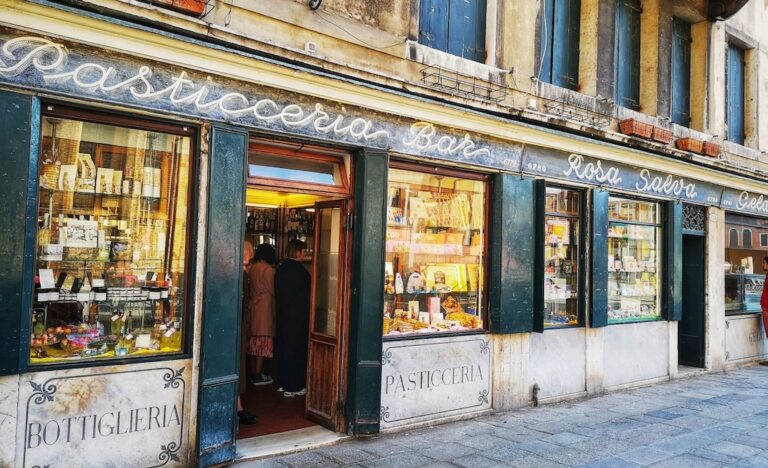
Breakfast in Venice follows the Italian template: a freshly baked cornetto — the Italian cousin of the croissant, slightly sweeter and less flaky — alongside a cappuccino or caffè latte taken standing at the bar. Where you go will depend on your neighbourhood, but if you find yourself in the neighborhood then Pasticceria Bar Rosa Salva on the Campo Santi Giovanni e Paolo is a wonderful address: a historic bar with excellent pastries and one of the loveliest squares in the city right on its doorstep.
If you’re coming to Venice at Carnival time, you’ll be able to sample sweet seasonal treats like castagnole and frittelle – a house specialty not to be missed.
09:00 Hours
Saint Mark’s Square
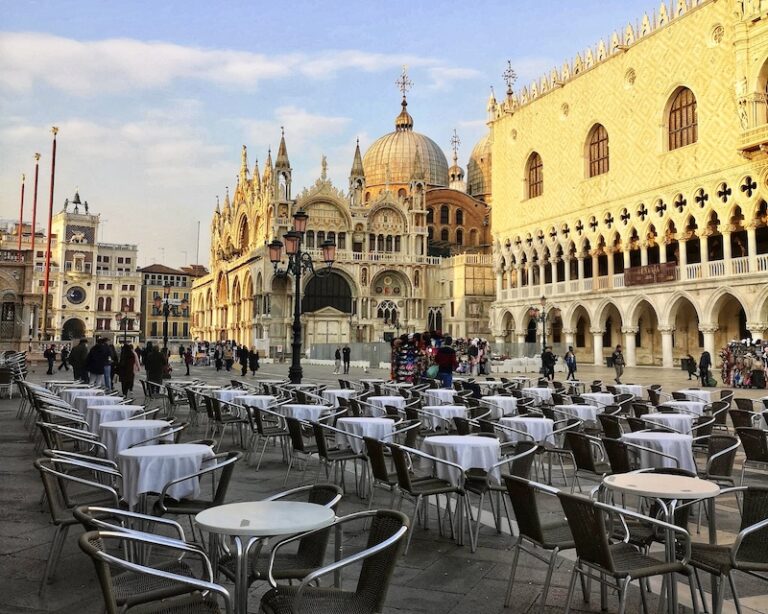
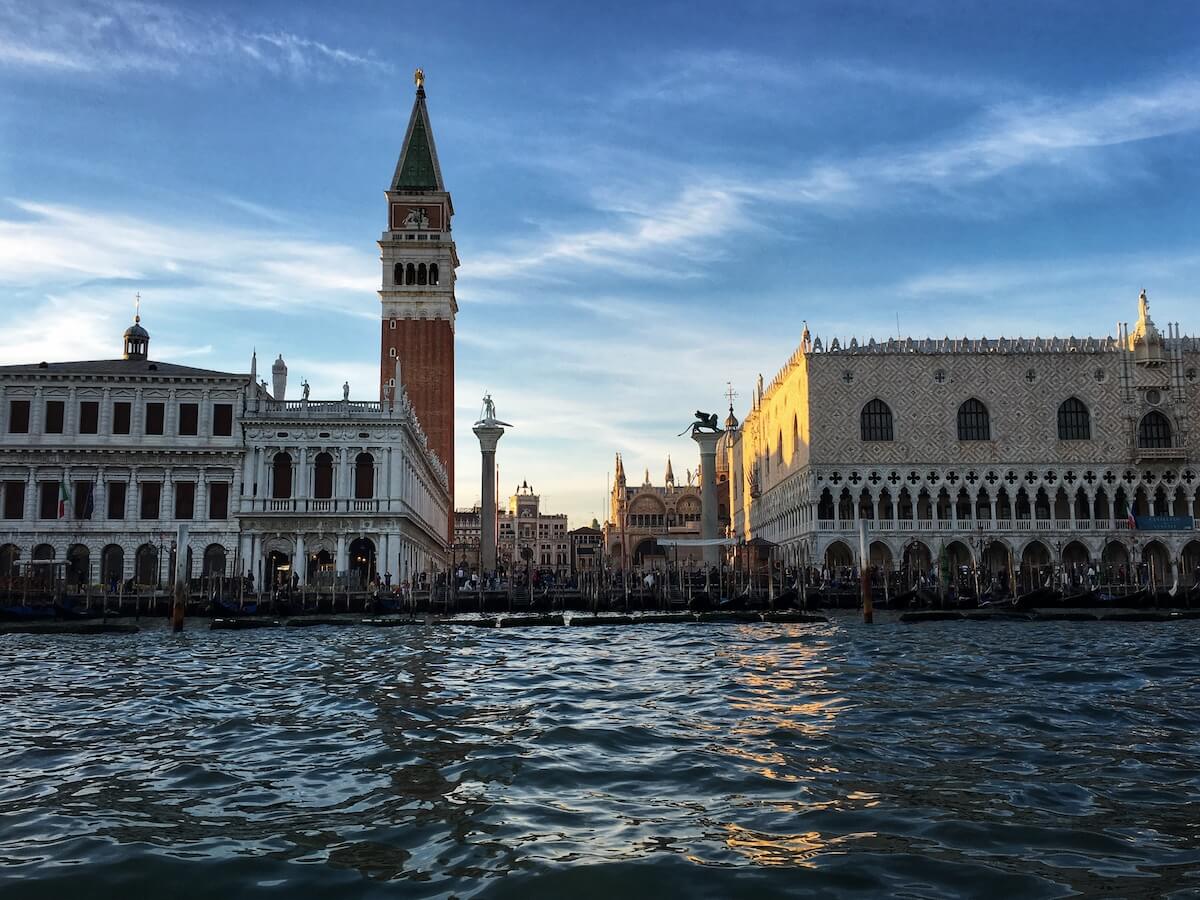
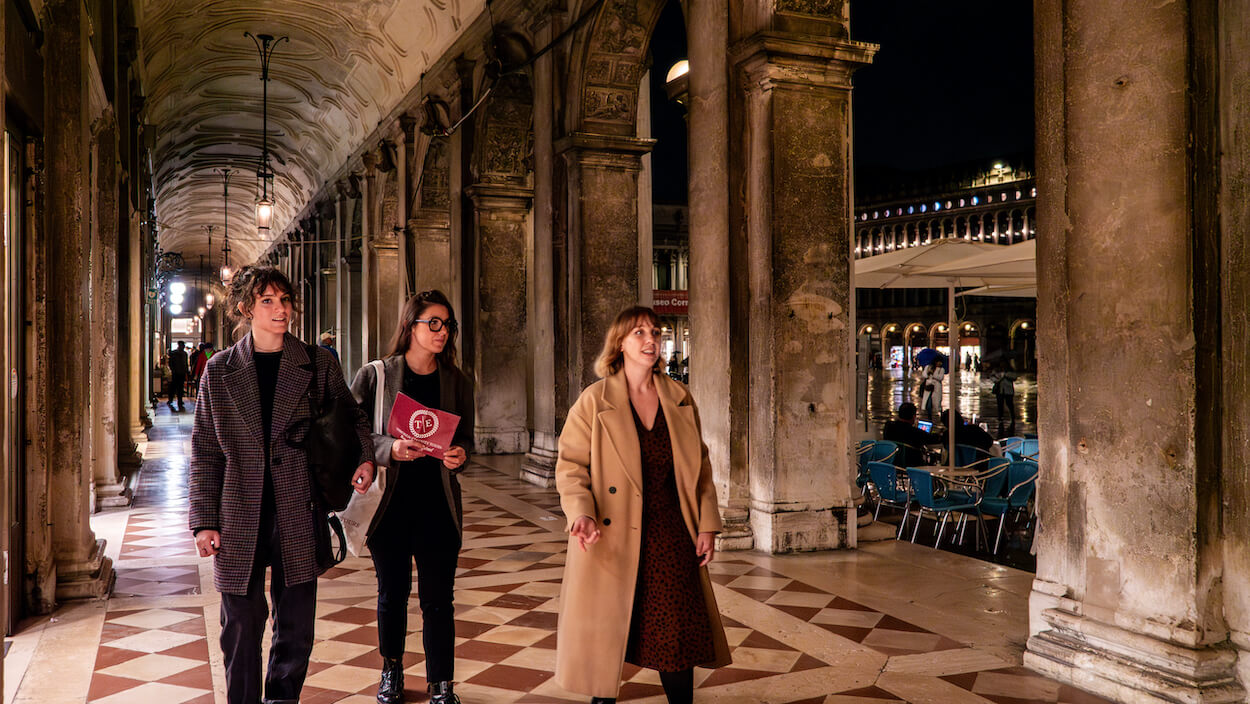
With limited time in Venice, there is really only one place to begin. St Mark’s Square is the beating heart of the city — the largest and most important public space in Venice, and the stage upon which a thousand years of Venetian history has been performed. Napoleon, not easily impressed, called it the drawing room of Europe. Standing here on a quiet morning, you’ll understand why.
The square is framed on three sides by the elegant arcaded Procuratie buildings, once home to the magistrates who administered the republic’s vast empire. At its far end rises the Basilica, glittering and improbable, its five domes and Byzantine facade unlike anything else in Italy.
To its right, the 99-metre campanile punches into the sky — a landmark visible from miles out across the lagoon, and the first thing sailors returning from sea would have seen on the horizon. The current tower is actually a 20th-century reconstruction: the original collapsed suddenly and without warning one morning in 1902, fortunately killing nobody except the caretaker’s cat.
The square is typically lovely at this time of the morning: the day-tripping tourists have yet to arrive, the air is fresh, and the only sounds puncturing the silence are the peels of the campanile’s bells and the screech of seagulls overhead.
09:30 Hours
Saint Mark’s Basilica
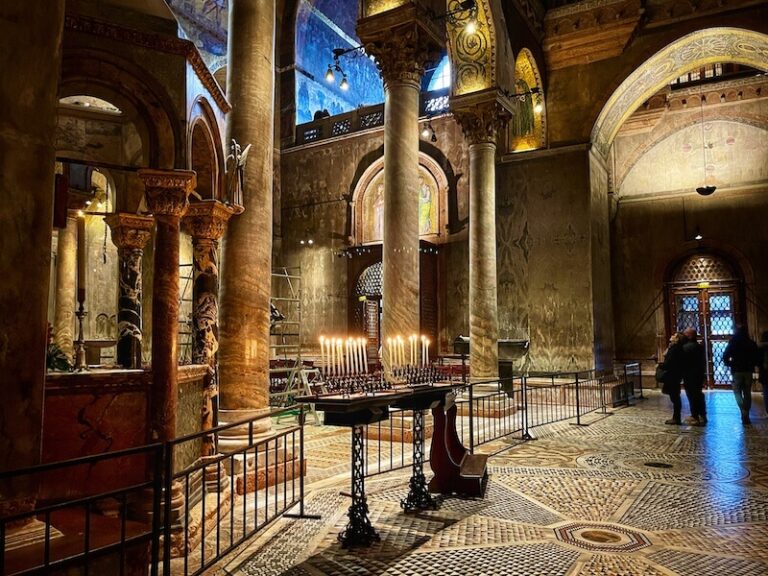
From the square, step inside the Basilica itself — and give your eyes a moment to adjust. Nothing quite prepares you for the interior of San Marco.
The story of the church begins in 828, when two Venetian merchants smuggled the relics of Saint Mark out of Alexandria, concealing them in a barrel beneath layers of pork to deter inspection by Muslim customs officials. The republic needed a patron saint worthy of its ambitions, and Mark — author of one of the Gospels, first Bishop of Alexandria — fitted the bill perfectly. The church built to receive his remains has been rebuilt, expanded and embellished ever since, accumulating layer upon layer of treasure and meaning over twelve centuries.
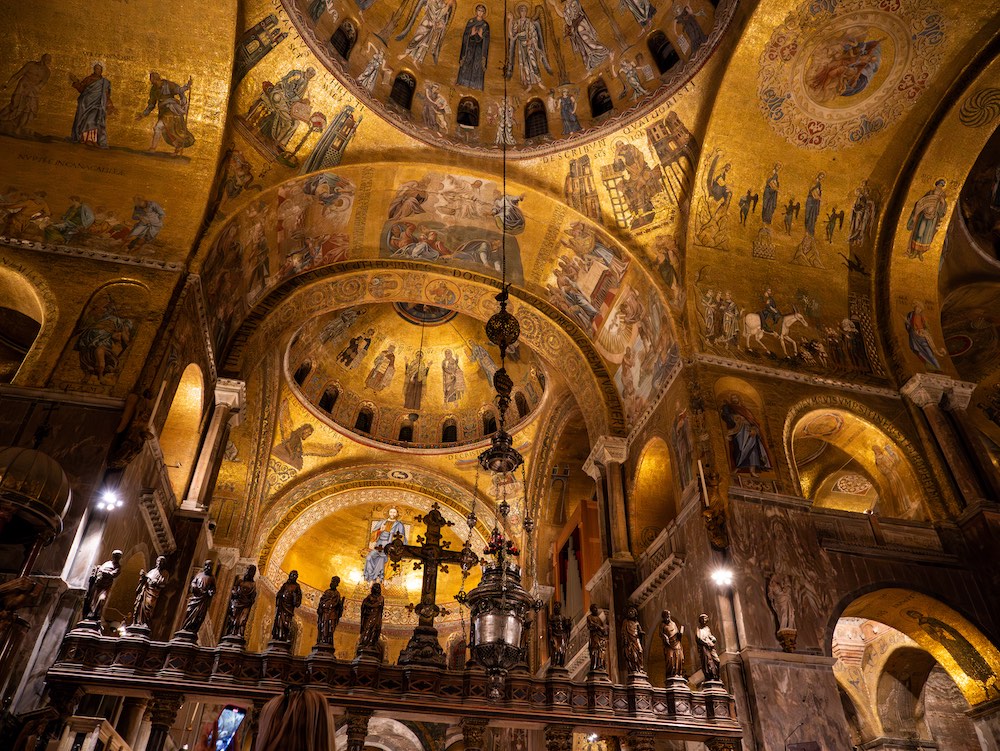
What you see today is the result of that long, lavish process. The interior is covered in over 4,000 square metres of mosaic, spanning the period from the 11th century to the Renaissance, all shimmering in the half-light of the domes above. The effect — golden, otherworldly, almost hallucinatory — is unlike anything else in Western architecture, owing far more to Constantinople than to Rome. Venice always looked east as much as west, and nowhere is that more evident than here.
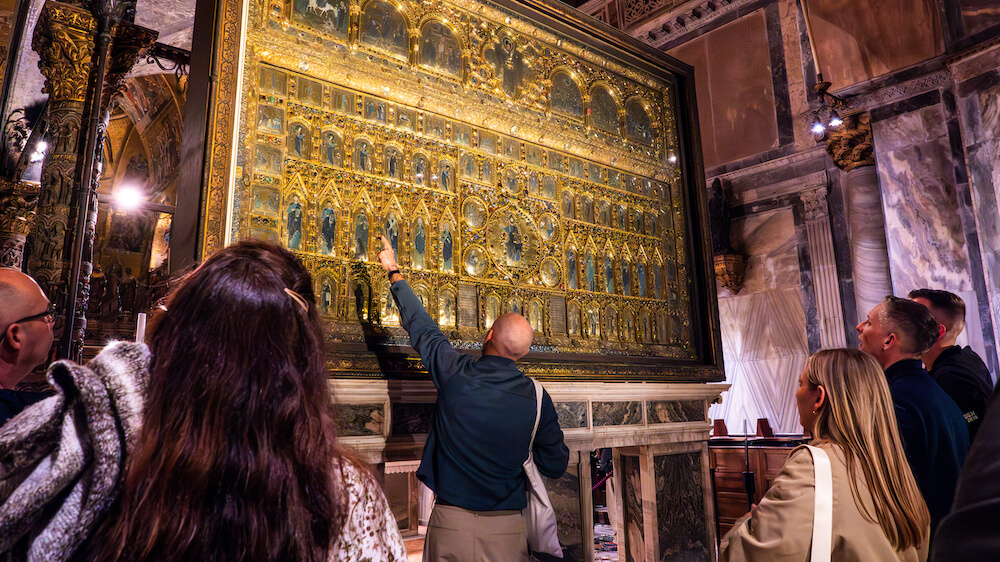
Before you leave, it’s worth paying for a few upgrades to the standard free entry. The Pala d’Oro — a Byzantine altarpiece encrusted with enamel panels and over 1,900 precious stones, assembled over several centuries — is one of the great treasures of medieval Europe and costs just a few euros extra to see. The terrace, reached by a steep internal staircase, offers magnificent views over the square and puts you eye-to-eye with the famous bronze horses, ancient originals of which are kept inside the museum.
Book your timed entrance in advance, or join a guided tour — the lines to get in can be considerable, and this is not a morning to waste standing in a queue.
10.30 HOURS
The Doge’s Palace
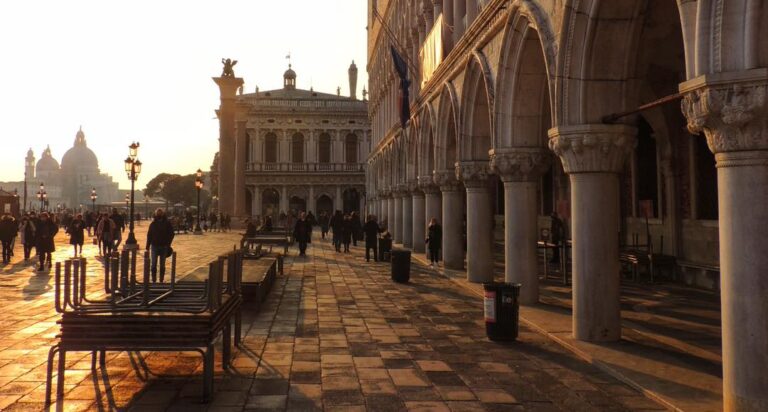
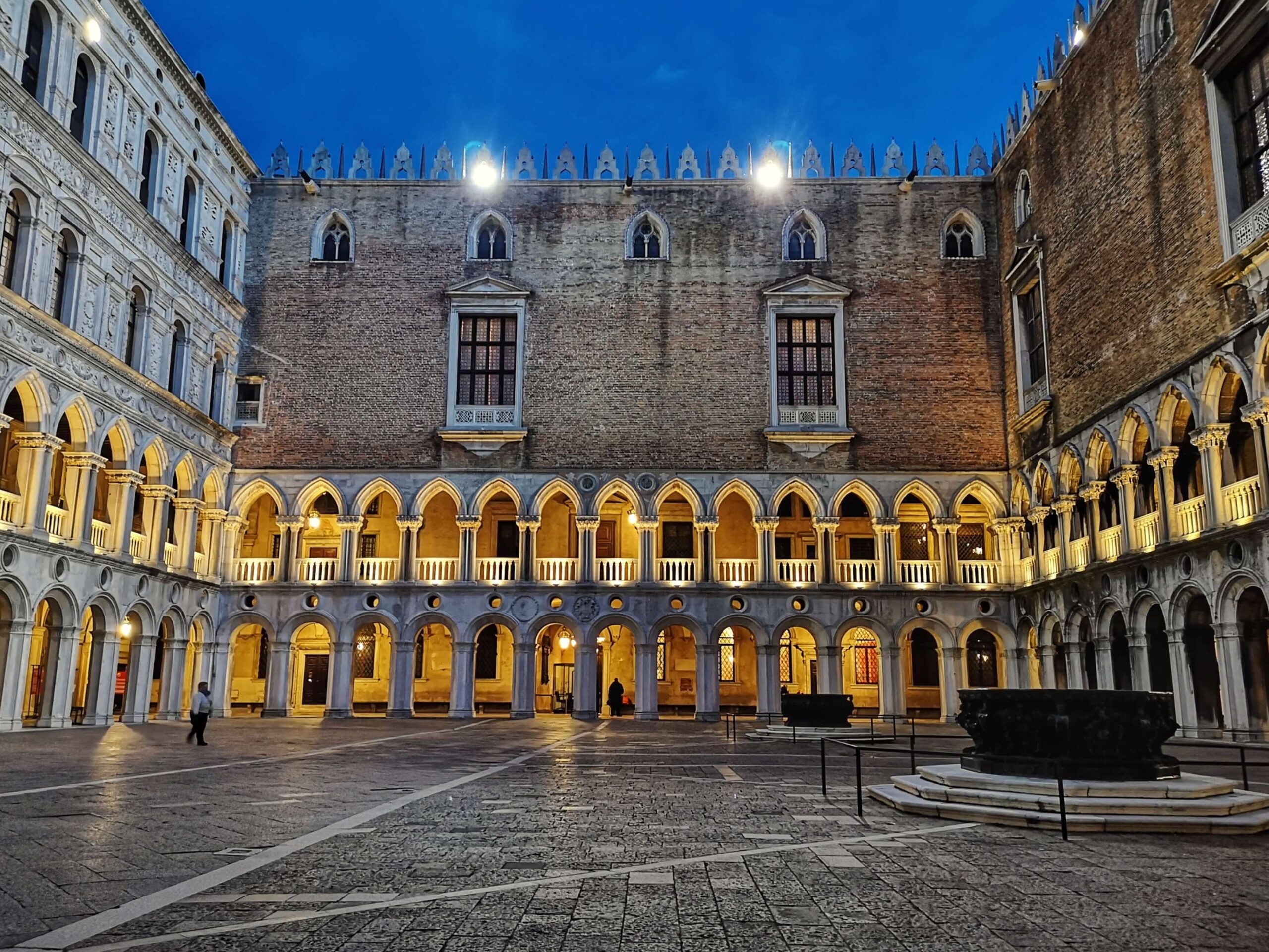
Step out of the Basilica and turn right, and you are immediately confronted with one of the most beautiful secular buildings in the world. The Doge’s Palace — the Palazzo Ducale — was for nearly a thousand years the seat of power of the Venetian republic, the residence of its ruler and the engine room of one of history’s most remarkable states.
Located on a sweeping curve of the city’s southern bank, the building that these fearsome potentates called home is visually extraordinary: a vast Gothic confection in pink Verona marble, its upper floors resting on a delicate double arcade of pointed arches in a structural arrangement that seems to defy gravity.
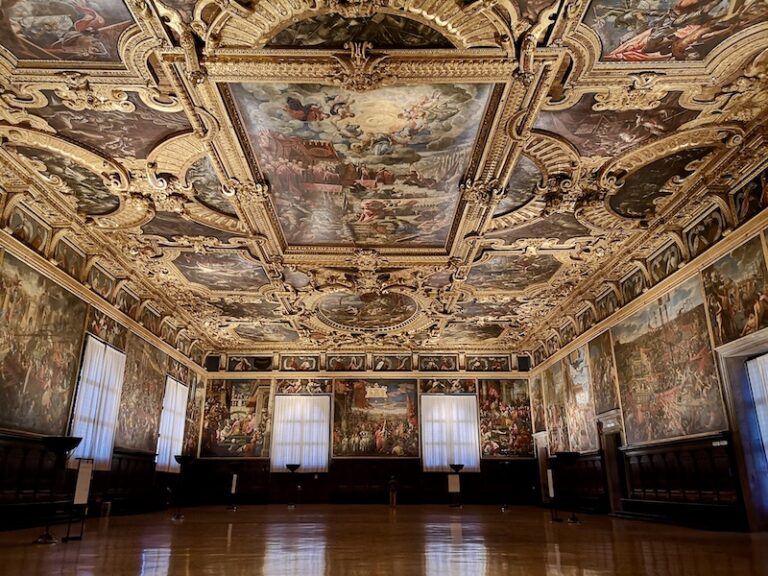
Inside, a series of ceremonial halls scale the building’s grandeur to an almost overwhelming degree. The Sala del Maggior Consiglio — the Great Council Chamber — is among the largest rooms in Europe, its walls and ceilings entirely covered with paintings glorifying Venetian power and piety by Tintoretto, Veronese and their contemporaries. Tintoretto’s Paradise, stretching across the far wall at some 22 metres wide, is thought to be the largest oil painting in the world.
The palace also contains the darker machinery of the republic’s power. Venice governed itself through a system of interlocking councils and committees designed to prevent any individual from accumulating too much influence — effective, but also generating a culture of surveillance and denunciation. The infamous Bocche di Leone — stone lion’s-mouth letterboxes built into the palace walls — allowed citizens to submit anonymous accusations against their neighbours.
The warren of prisons accessible through the palace gives the whole complex an edge of menace that the gilt and grandeur of the state rooms can’t entirely dispel. Among those who spent time in the cells was Giacomo Casanova, who in 1756 became the only prisoner ever to escape from them — a story he would later recount with characteristic relish.
The prisons lead us to the next stop on our day in Venice.
12:00 HOURS
The Bridge of Sighs
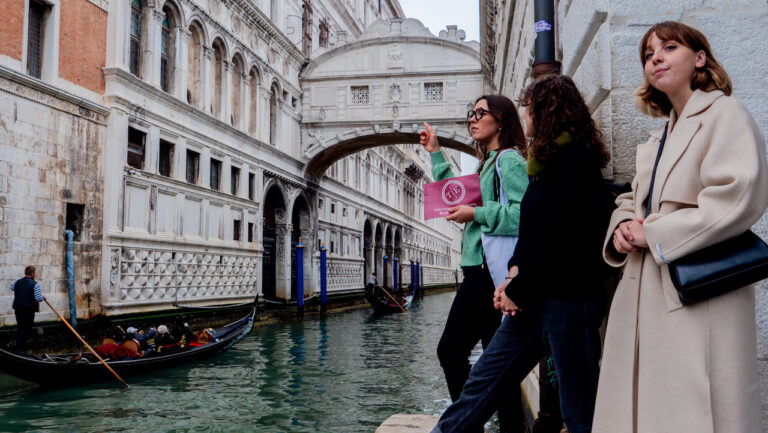
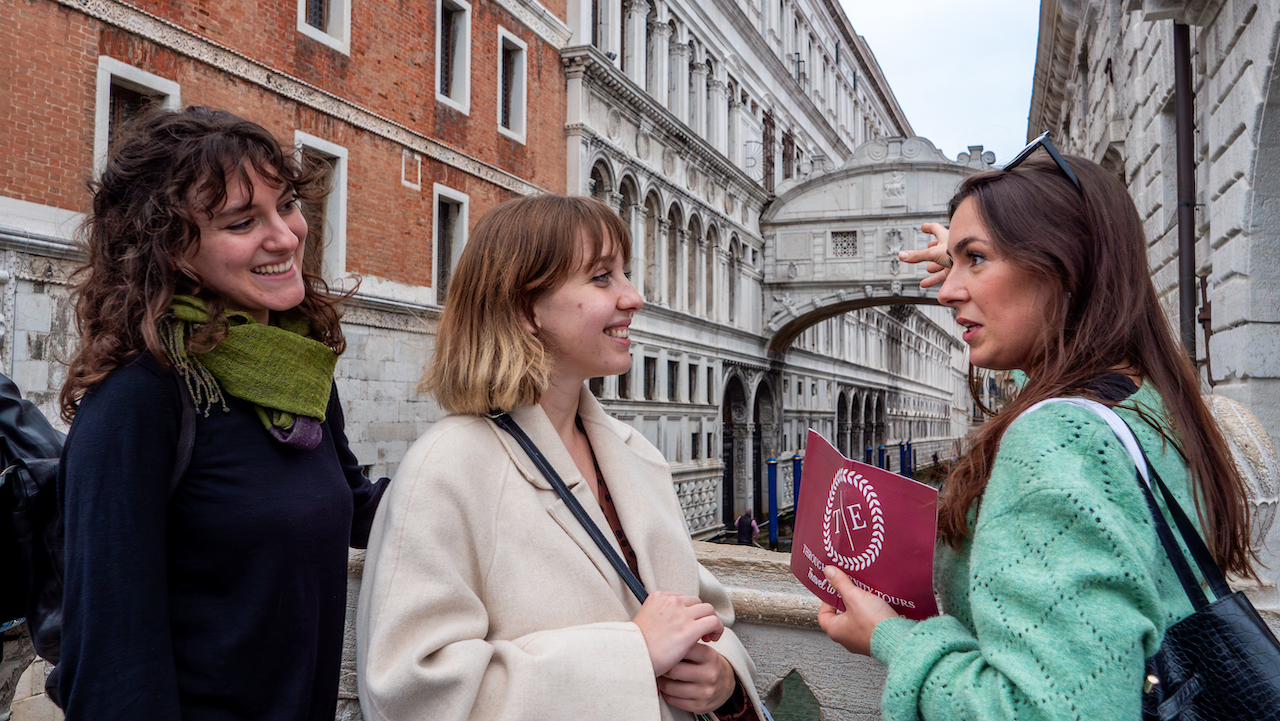
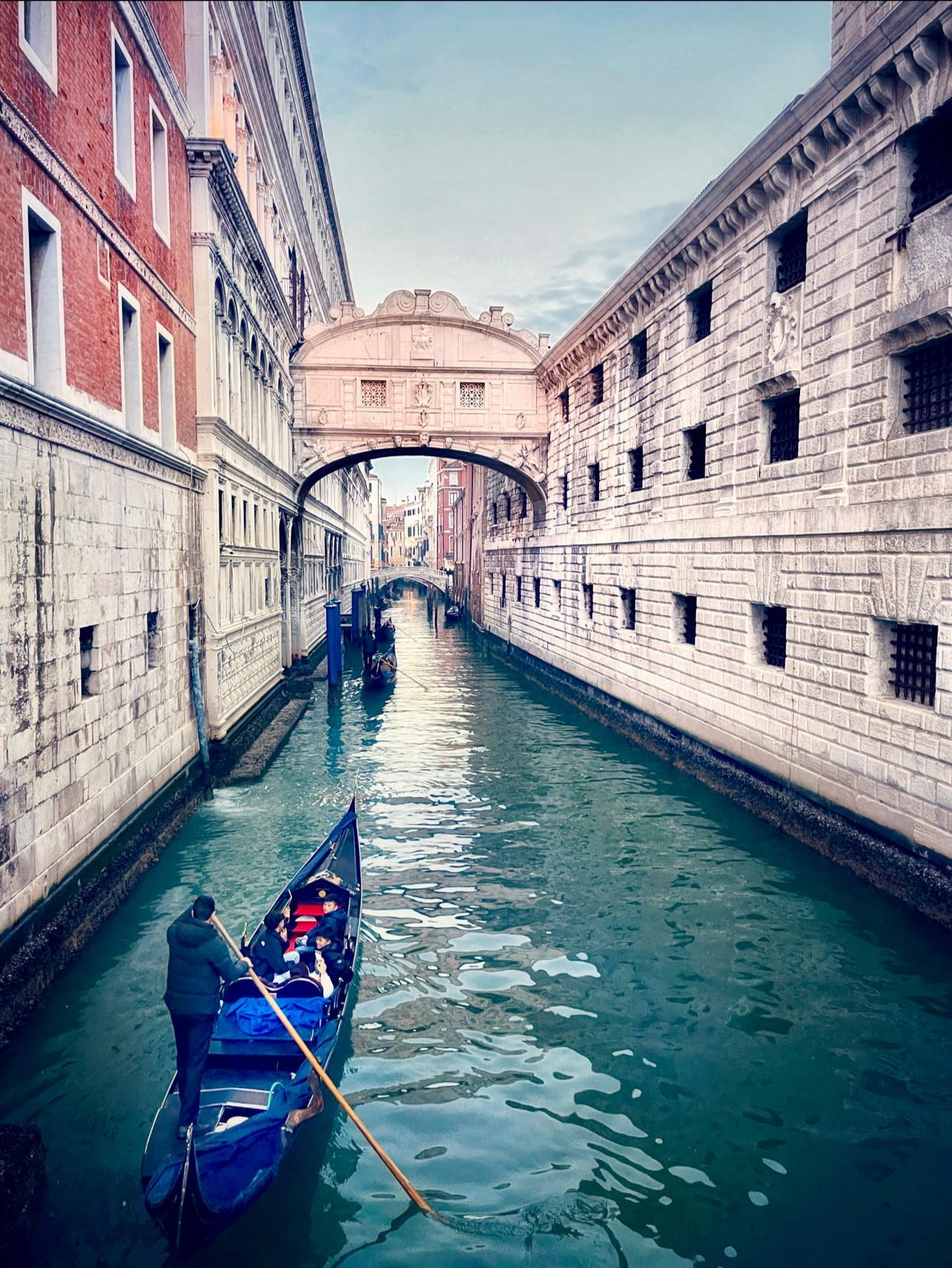
Also part of the palace complex, and arguably the most photographed spot in Venice, the Bridge of Sighs connects the Doge’s Palace directly to the New Prisons across the narrow Rio di Palazzo canal.
It was built in 1600, designed in white Istrian stone by Antonio Contino, and its name — attributed variously to Lord Byron and to popular tradition — refers to the sighs of prisoners catching their last glimpse of the outside world and the beauty of Venice through the bridge’s narrow stone-grilled windows before being led into long confinement.
Thankfully a stretch in the Doge’s slammer is no longer a prerequisite for those wishing to cross the bridge, as you can visit the it on the Palazzo Ducale itinerary. After leaving the Doge’s Palace, make sure to walk around the corner to the Ponte della Paglia, just around the corner from the palace entrance on the waterfront. From here, you’ll be able to admire the Bridge of Sighs from the best angle.
12:15 HOURs
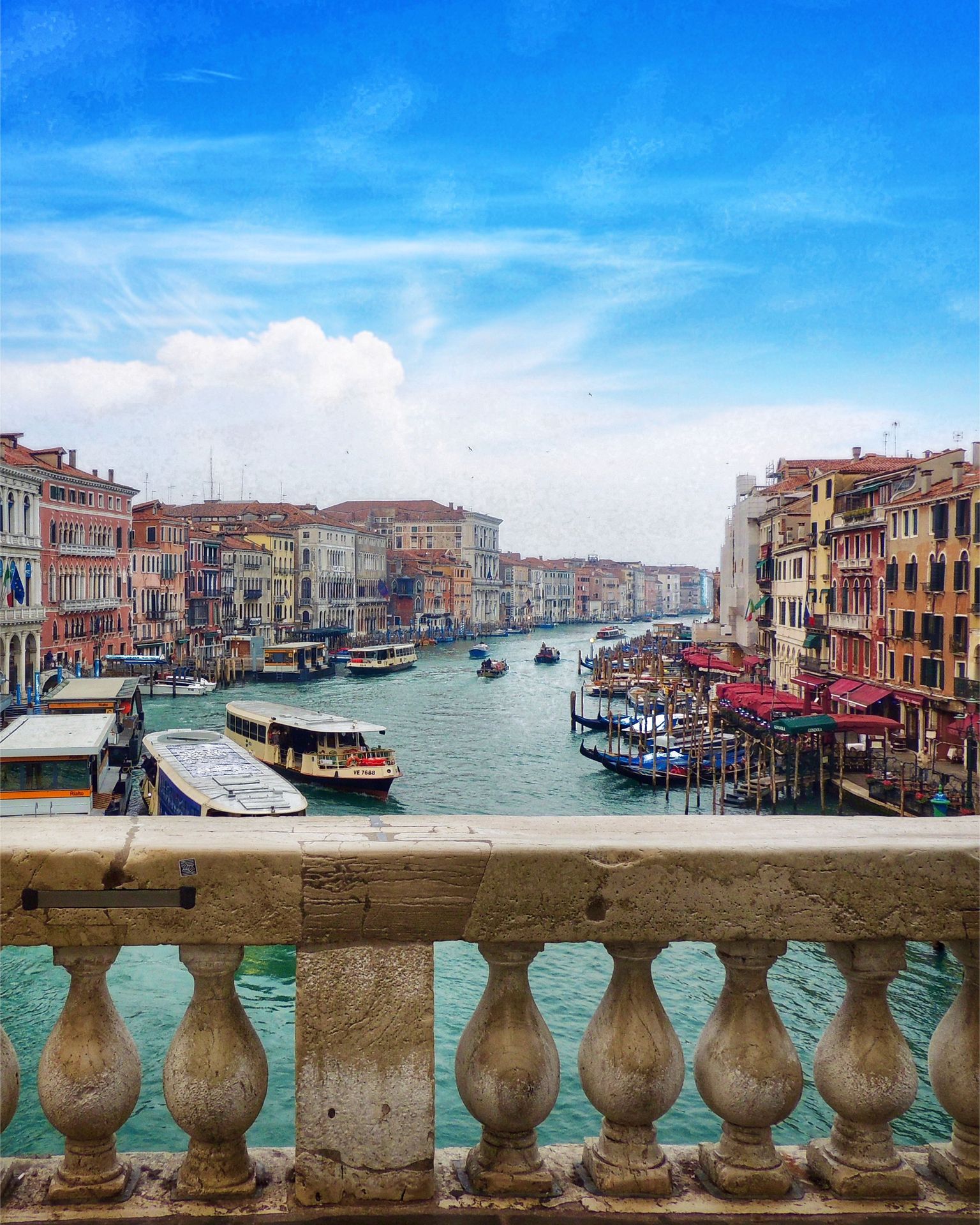
Rialto Bridge
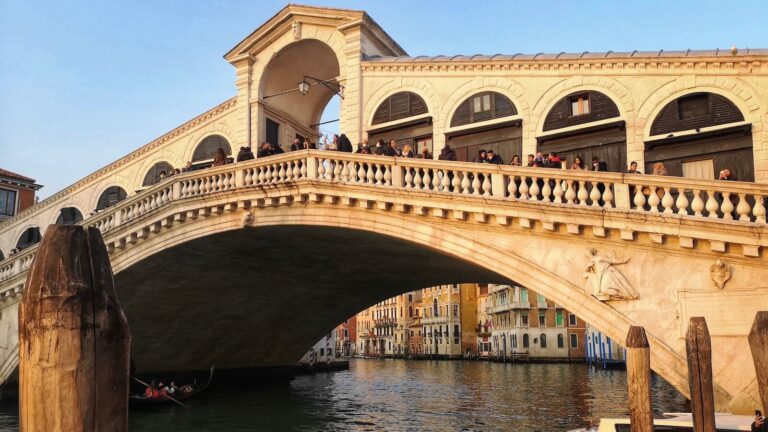
From the Bridge of Sighs, make your way northward through the city towards the Rialto — a ten-minute walk through the dense, medieval fabric of the city that is itself one of the pleasures of being in Venice. Don’t worry if you get slightly lost along the way – the detours are almost always worth it!
The Rialto Bridge is the oldest and most famous of the roughly 400 bridges that traverse Venice’s waterways, and the only crossing of the Grand Canal for over three centuries. The current stone bridge, designed by Antonio da Ponte and completed in 1591 after decades of debate — Michelangelo and Palladio both submitted losing proposals — replaced a series of earlier wooden structures, one of which features in Carpaccio’s paintings of 15th-century Venice in the Accademia gallery.
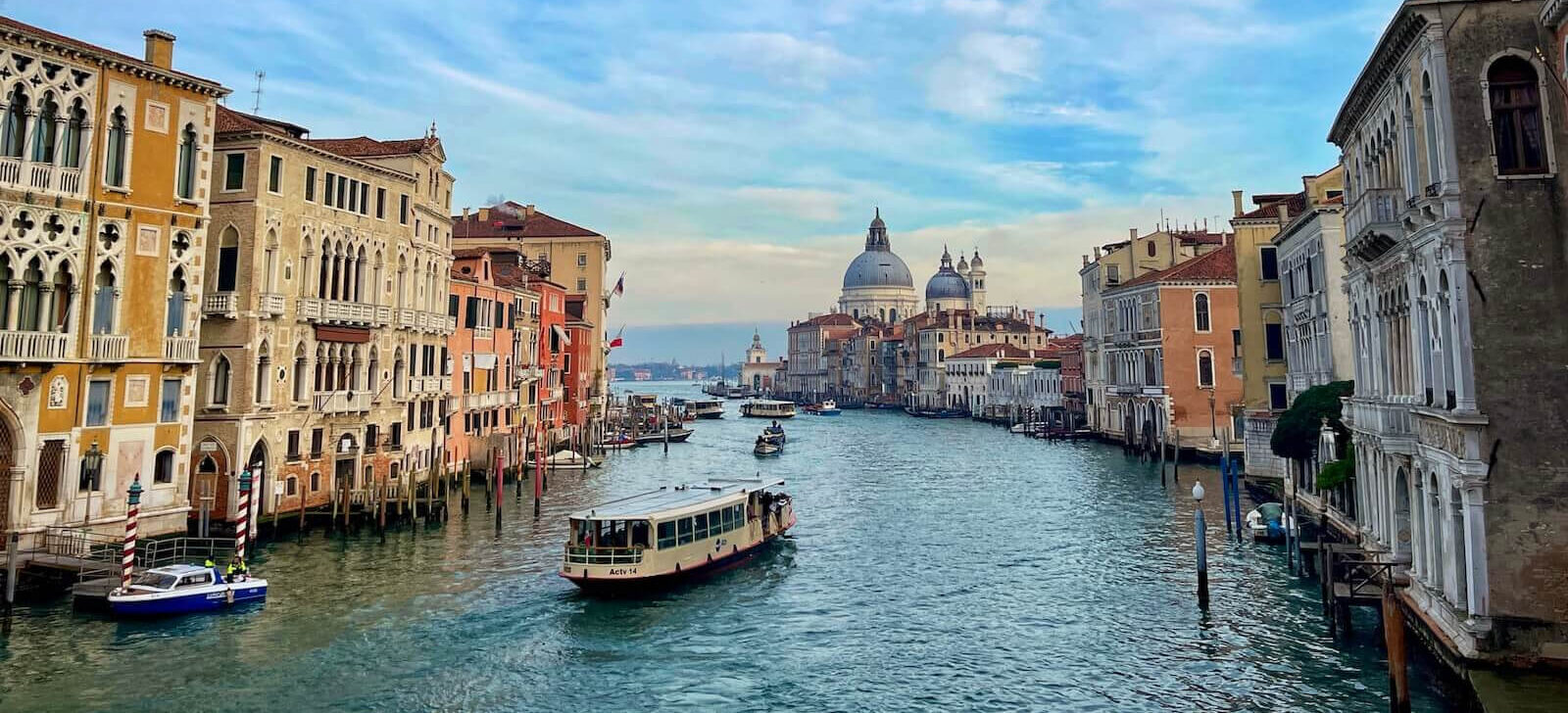
Standing at the top of the bridge’s central arch and looking down the curve of the Grand Canal in either direction is one of those views that Venice seems to produce almost effortlessly: vertiginous in its beauty, familiar from a thousand paintings and photographs, yet still somehow utterly captivating in person.
12:30 HOURS
Rialto Fish Market
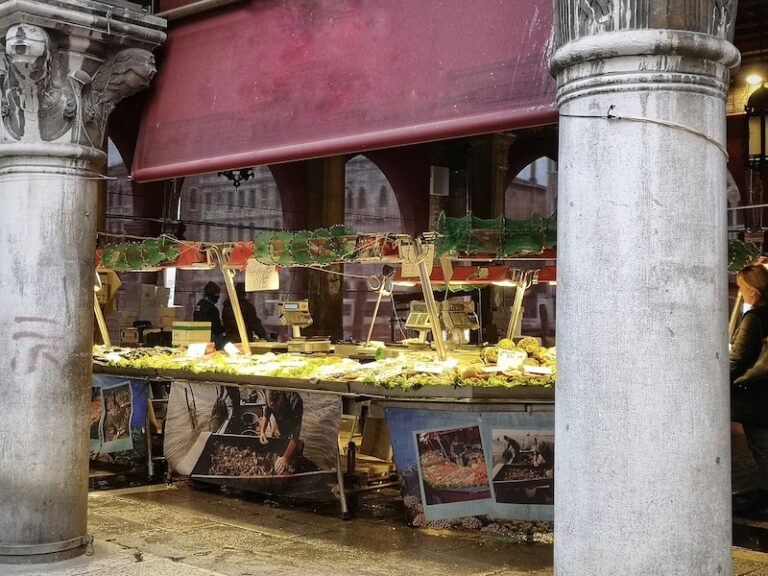
Cross the bridge and walk straight ahead for a couple of minutes, and you’ll find yourself at the Rialto fish market This is one of the most atmospheric spots in Venice, and a vivid reminder that underneath the art and the architecture, this was for centuries one of the busiest trading cities on earth.
The market operates under a 19th-century neo-Gothic arcade whose columns are carved with fish-shaped gargoyles, a detail that somehow encapsulates the Venetian genius for combining the practical and the beautiful.
Every morning, the stalls fill with the catch from the lagoon and the Adriatic — clams, crabs, spider crabs, sea bass, sole, and all the strange and prehistoric-looking creatures that end up in a proper Venetian seafood risotto.
The vendors are loud, the atmosphere is brilliant, and by 12:30 the market is winding down for the day, which makes this an ideal moment to arrive: busy enough to have atmosphere, but calm enough to actually look at things.
Appetite duly whetted, it’s time to get ready for lunch.
13:00 HOURS
Lunch at a Traditional Bacaro
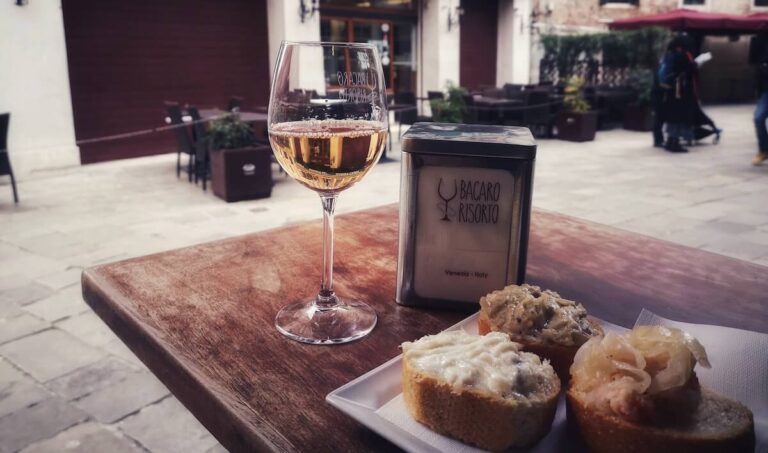
After a full morning on our feet, it’s high time we started thinking about our stomachs. And in Venice, the right answer to an express lunch is the bacaro.
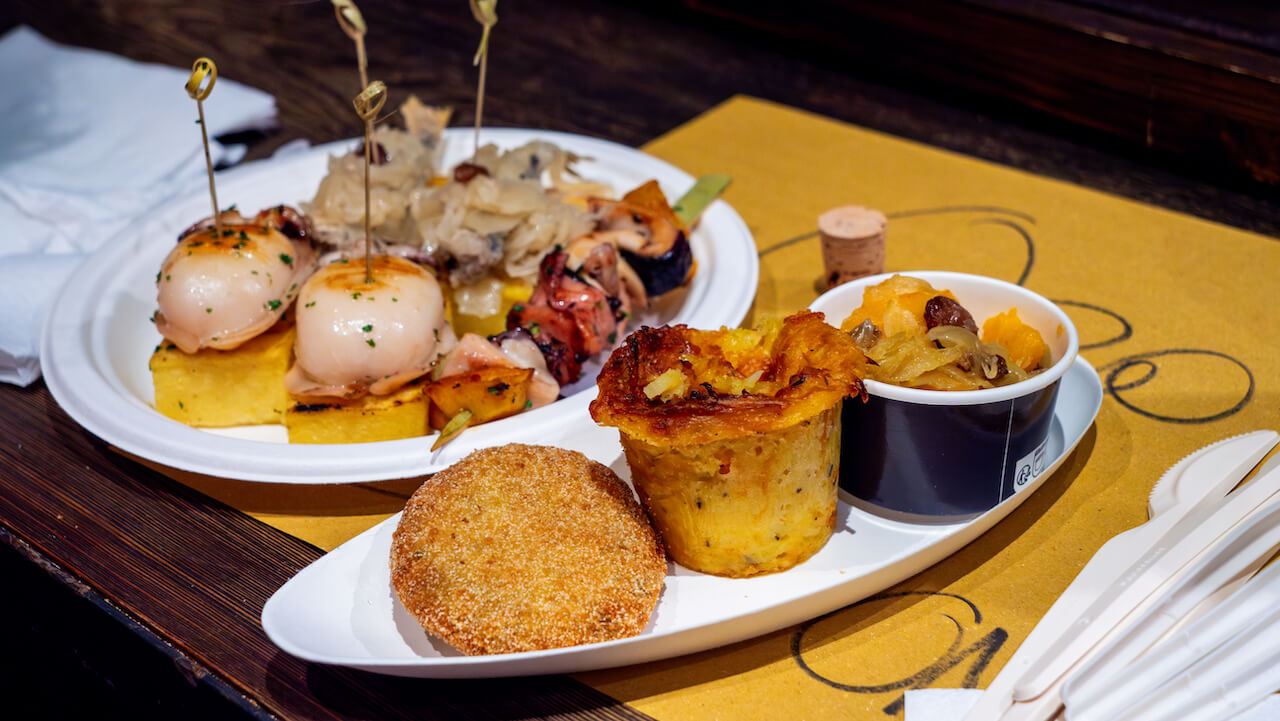
These traditional Venetian wine bars are one of the city’s great unsung pleasures: small, usually standing-room only, invariably tucked down a side alley, and serving an ever-changing selection of cicchetti — small preparations of bread, seafood, vegetables and cured meat, piled up on the counter and priced at a euro or two each — alongside generous pours of local wine. The tradition is ancient, the quality is high and the prices, by Venice standards, are remarkable.
Eating cicchetti in a good bacaro is one of the most enjoyable things you can do in this city, and the area around the Rialto market is the best in Venice for finding them. Three reliable addresses within two minutes of the market: Osteria all’Arco, a tiny and always-busy spot that is consistently among the best in the city; Al Mercà, open-air and perfect in good weather; and Cantina do Mori, which has been pouring wine in these alleys since 1462 and shows no sign of stopping.
14:00 HOURS
Walk through San Polo
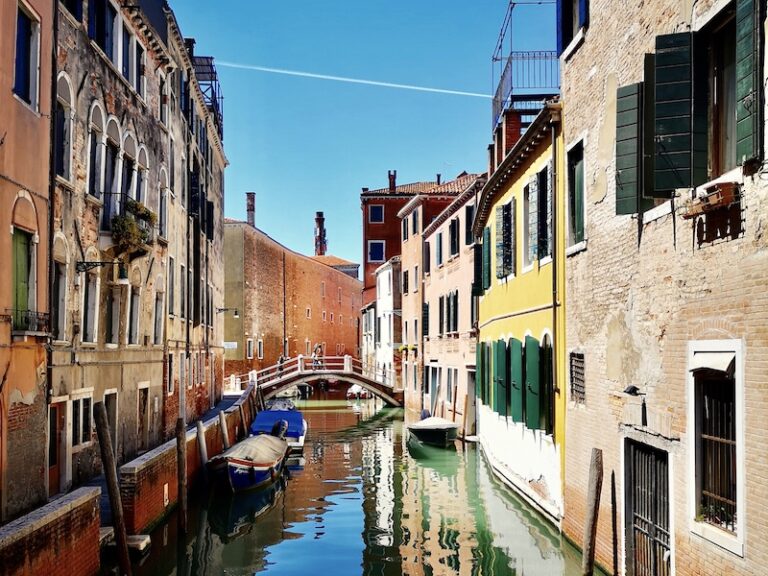
Appropriately fed and watered, it’s time to cross Venice on foot. The city is divided into six neighbourhoods — sestieri — and the afternoon takes us into San Polo and Dorsoduro, two of the most characterful and least touristed parts of the historic centre.
The walk from the Rialto to our next stop takes about 15 minutes, and the route is half the point. Venice at street level is a constant sequence of small revelations: a canal appearing suddenly at the end of an alley, a campo opening up without warning, a church facade so casually magnificent that it stops you mid-stride.
Somewhere along the way you’ll cross the Ponte delle Tette — the Bridge of Breasts — whose name commemorates its role in the early modern period as a designated zone of street prostitution. In an attempt to discourage sodomy among the city’s male population, Venetian authorities authorized the local sex workers to open display their breasts from their balconies overlooking the bridge to drum up business.
14:30 HOURS
The Frari
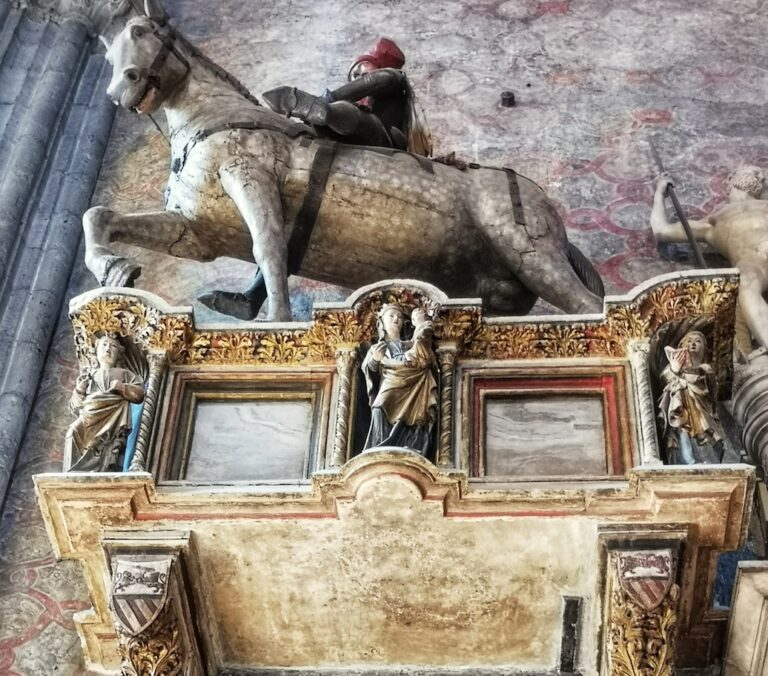
The church of Santa Maria Gloriosa dei Frari might not the most famous building in Venice, but it’s certainly one of the most rewarding — a vast Gothic brick basilica built by the Franciscans in the 14th and 15th centuries, sober on the outside and overwhelming within, its interior packed with some of the greatest art in the city.
The work that demands your attention from the moment you step through the door is Titian’s Assumption of the Virgin, completed in 1518 and still hanging above the high altar for which it was painted. It is a painting of almost shocking dynamism: the Virgin rises in a blaze of golden light, arms outstretched, while the apostles below gesticulate in astonishment and God the Father descends from above to meet her.
The scale is immense — nearly seven metres high — and the emotional temperature even more so. It was the painting that established Titian’s reputation as the greatest painter of his generation, and five centuries of subsequent art history have done nothing to diminish it.
Elsewhere in the church, look out for the Pesaro Altarpiece, another Titian masterpiece of a very different register. Commissioned by the wealthy Jacopo Pesaro to commemorate a naval victory over the Ottomans, it depicts members of the Pesaro family flanking the Virgin and Child in an asymmetrical composition that broke decisively with convention — the Virgin, for the first time in Venetian painting, placed off-centre, the architecture of the picture opening up dynamically to the sky.
Don’t leave without finding Antonio Canova’s pyramid-shaped tomb — the great neoclassical sculptor had intended it as a monument to Titian, but after Titian’s death it became his own mausoleum instead, a magnificent piece of irony that Canova, with his sharp sense of theatre, might have appreciated.
15:30 HOURS
Scuola Grande di San Rocco
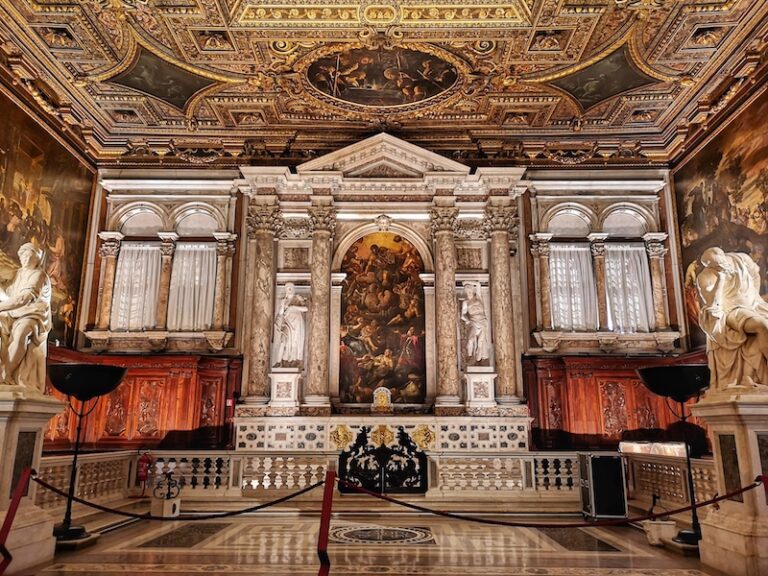
Two minutes from the Frari, and easy to miss if you don’t know to look for it, the Scuola Grande di San Rocco is one of the great artistic wonders of Venice — and the very definition of a hidden gem.
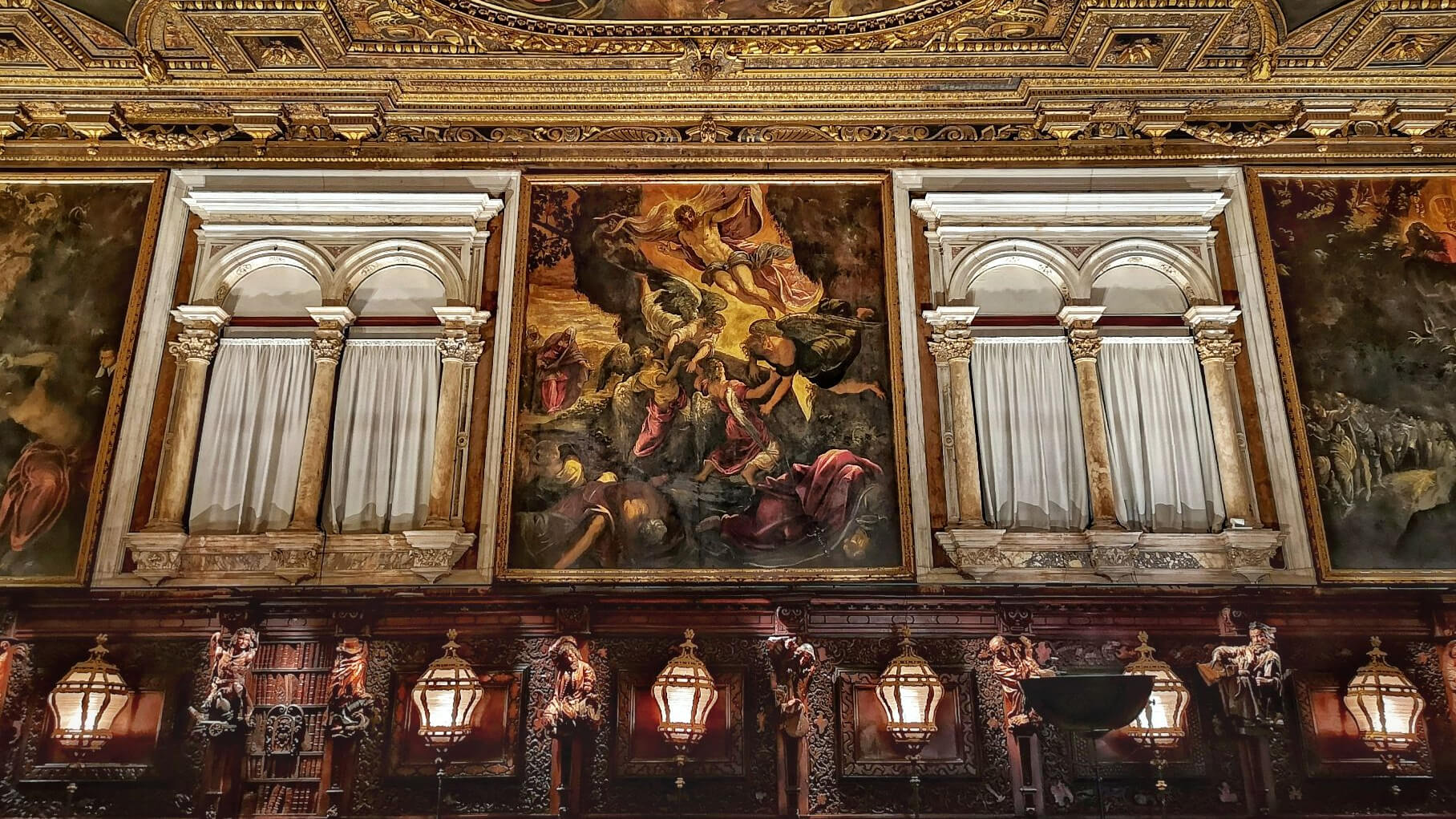
The scuole were Venice’s great confraternities — civic and religious brotherhoods of wealthy merchants and professionals that functioned as a combination of mutual aid society, social club and patron of the arts. San Rocco, dedicated to the plague-busting saint of the same name, was among the most powerful, and in 1564 they made a decision that would define the building forever: they commissioned Jacopo Tintoretto to begin decorating its walls and ceilings.
Tintoretto spent the next 23 years doing so, producing more than 60 large-scale paintings depicting scenes from the Old and New Testaments across the ground floor hall, the main upper hall and the Sala dell’Albergo. The result is one of the most sustained and overwhelming artistic achievements of the Renaissance — a complete world in paint, every surface alive with Tintoretto’s characteristic drama of light and shadow, his figures tumbling through space at impossible angles, his skies crackling with supernatural energy. The comparison to the Sistine Chapel is not hyperbole. Take your time here.
17:00 HOURS
Squero San Trovaso
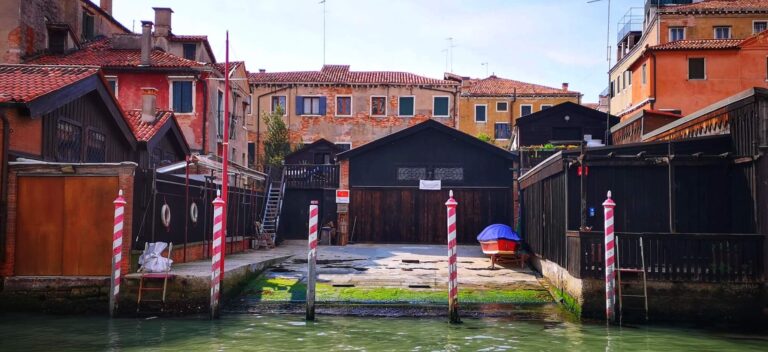
By now you’ve earned a drink, and the next stop combines aperitivo hour with one of the more quietly wonderful sights in Venice. Make your way to Osteria al Squero in the Dorsoduro sestiere, order a spritz, and look across the narrow canal in front of you.
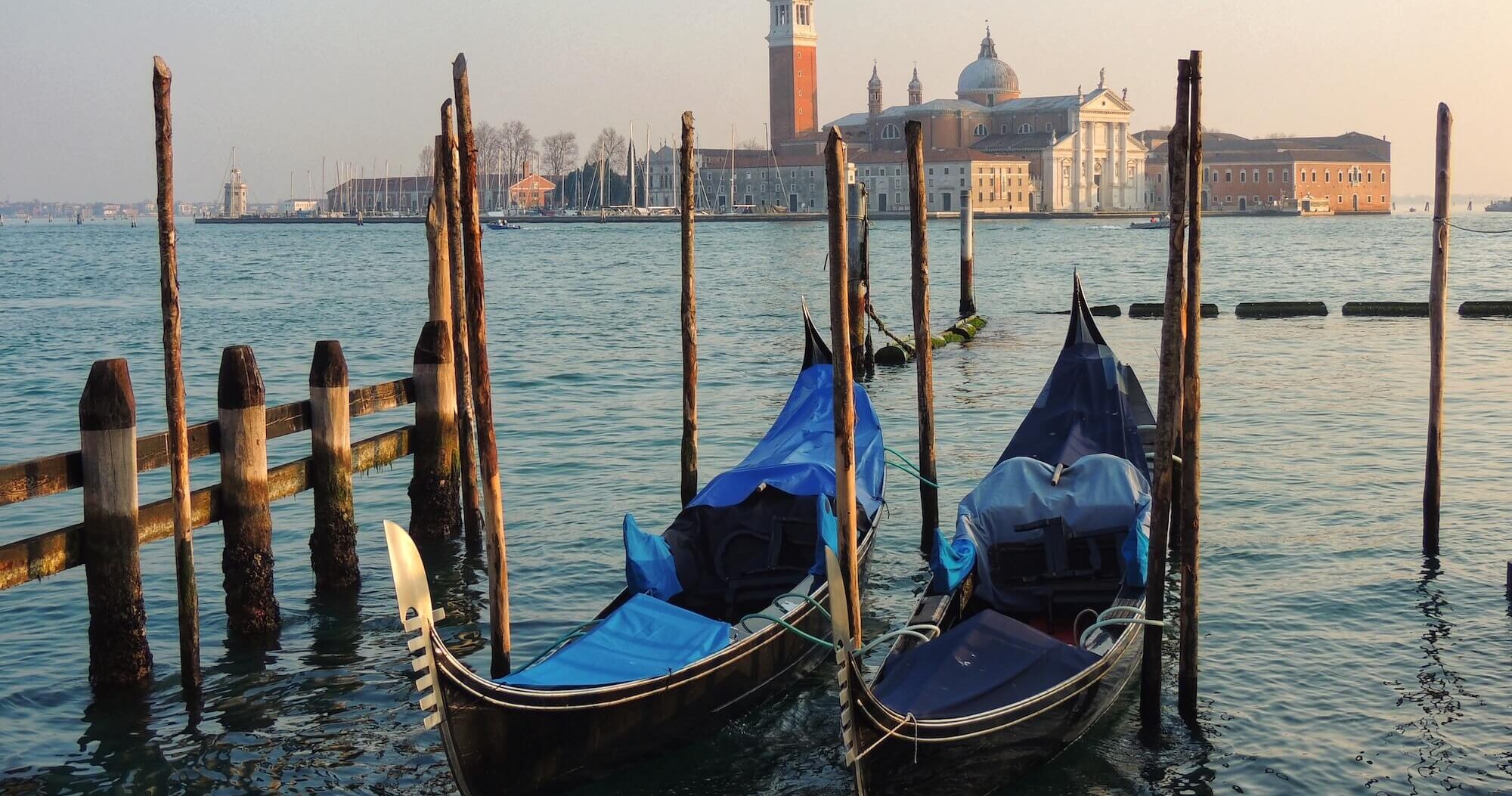
What you’re looking at is the Squero San Trovaso — one of the last working gondola workshops, or squeri, in Venice. Gondolas are among the most complex and labour-intensive watercraft ever designed: each one is assembled from eight different types of wood, built asymmetrically to compensate for the weight of the gondolier, and requires hundreds of hours of skilled work to construct.
There are fewer than 500 gondolas on the water in Venice today, compared to around 10,000 at the republic’s peak, and the handful of squeri still operating are among the last custodians of a craft that is, in every sense, irreplaceable.
Sit, drink, watch, and feel extremely fortunate.
17:45 hours
Gondola Ride from the Accademia
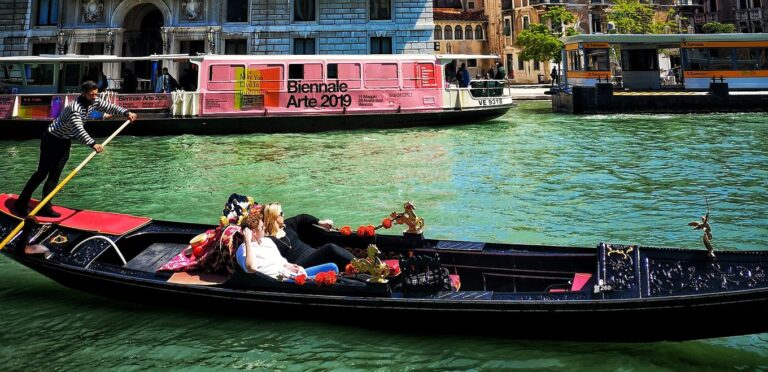
Make the 5-minute walk from Osteria al Squero to the Ponte de’’Accademia. The Accademia gallery itself is one of Venice’s finest museums, but today you won’t have time to visit – pencil it in for your next trip. Instead, as twilight begins to lengthen it’s time for us to hit the water. Conveniently the Ponte dell’Accademia is one of the best departure points for a gondola ride in Venice.
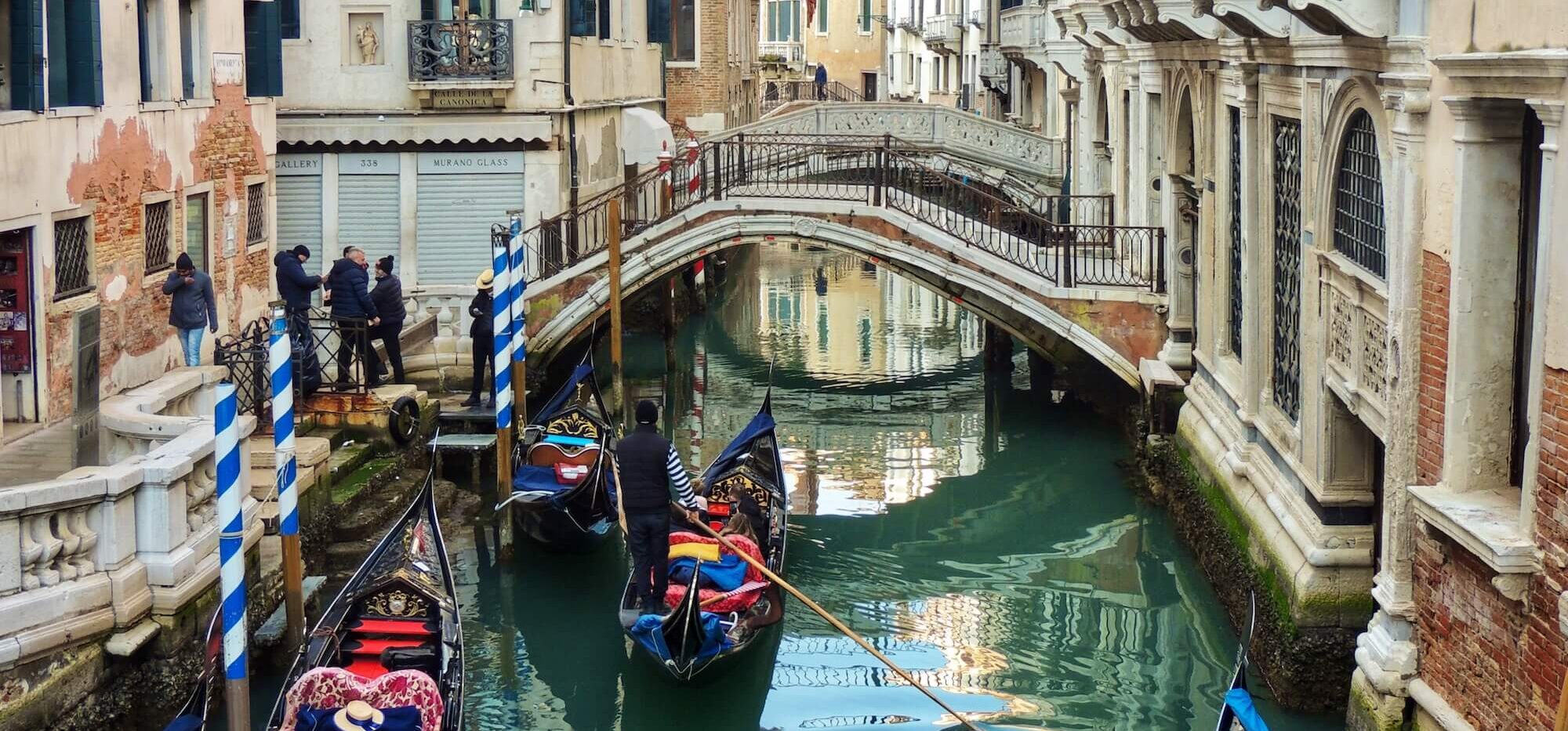
Hire a gondolier here and you’ll be able to enjoy a great route down the Grand Canal as well as some more hidden waterways – the perfect way to conclude your one day in the Floating City. After your gondola tour, your gondolier will be able to drop you off back in the heart of the historic center. Head back to your hotel to freshen up, and ready yourself for dinner and the night ahead – where a whole new Venice adventure awaits!
19:30 hours
Dinner
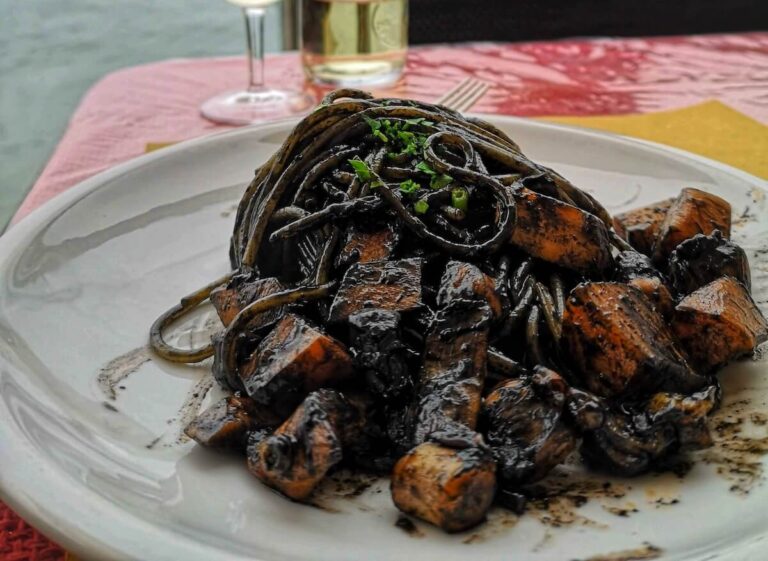
After your gondola ride, change out of your walking shoes and get ready for the evening. The crowds thin, the light turns amber over the canals, and the city that spent the day performing for tourists finally becomes its most authentic self. This is the best time to eat.
Venetian cuisine is one of the most distinctive regional food cultures in Italy. Forget pizza, carbonara or thick ragu. This is not the food of Rome or Naples. Venice looks instead to the lagoon and the Adriatic for its ingredients, and to centuries of maritime trade for its flavours — and the result is deeply, specifically local.
A few things to order. Sarde in saor — fried sardines marinated in onions, vinegar, raisins and pine nuts — is Venice’s most emblematic dish, a sweet-sour preparation dating back to the Middle Ages that tells you everything about the city’s cooking in a single mouthful. Baccalà mantecato, salt cod whipped with olive oil into a remarkably light cream, is the other unmissable antipasto.
For pasta, bigoli in salsa — thick spaghetti with a slow-cooked anchovy and onion sauce — is the Venetian signature. And if you eat offal, fegato alla veneziana, calf’s liver with white onions and polenta, is one of the great dishes of the Italian repertoire.
Where to go? We’d recommend wandering into Dorsoduro or Cannaregio rather than eating near St Mark’s or the Rialto, where quality and price tend to have an inverse relationship.
End the evening as Venice demands: with a final walk along the water, the reflections shifting in the canals, the city quieter and more beautiful than at any point during the day. One day is never quite enough. But what a day!

Getting Around Venice
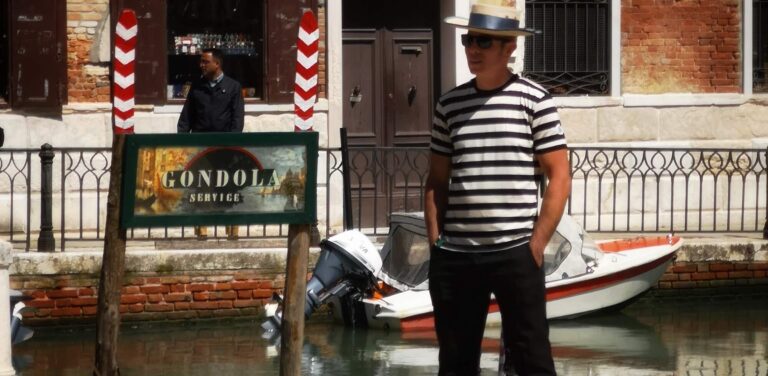
Venice is, in one important sense, the easiest city in Italy to navigate: there are no cars, no buses, no scooters threading through the alleys, and no traffic to contend with. The city is yours on foot, and walking is by far the best way to experience it. The itinerary in this guide is designed to be covered entirely on foot, and the distances involved are shorter than they might appear on a map. Venice is compact, and even the longer walks between stops are part of the pleasure.
That said, a few practical points are worth knowing.
The city’s public water transport is operated by ACTV and runs on a network of vaporetto lines — the water buses that serve the Grand Canal and the outer islands. Line 1 is the most useful for visitors, stopping at every landing stage along the Grand Canal from Piazzale Roma to St Mark’s Square; Line 2 covers the same route with fewer stops and more speed.
A single vaporetto ticket costs €9.50, which makes a multi-day travel card (available for 24, 48 or 72 hours) considerably better value if you plan to use the boats more than once or twice. Tickets and passes can be bought at ACTV booths at the major landing stages or via the AVM Venezia app.
Water taxis — the sleek, wooden motoscafi — are a faster and considerably more glamorous alternative, but priced accordingly. A taxi from the airport or train station to your hotel will typically cost €70–€100 depending on your destination, and prices rise after hours. They are worth it for arrival or departure with heavy luggage; for getting around the city itself, the vaporetto is almost always the more sensible choice.
Finally, if you are arriving by train, Venice Santa Lucia station deposits you directly into the city on the Grand Canal — one of the great arrival experiences in travel. From the station, the walk to St Mark’s Square takes around 35 minutes through the heart of the city. Alternatively, catch the vaporetto Line 1 or 2 from the stop directly outside the station.
Frequently Asked Questions About Visiting Venice in a Day
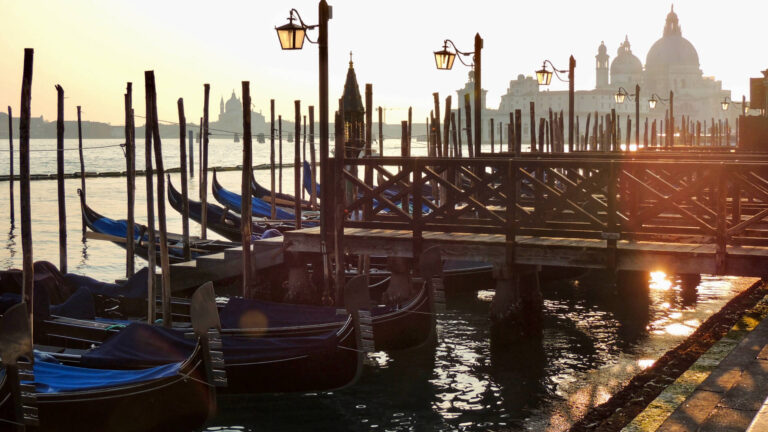
Is one day enough to see Venice?
One day is enough to experience the essential Venice — St Mark’s Basilica, the Doge’s Palace, the Rialto, a bacaro lunch, the best of San Polo, a gondola ride at sunset — and to understand immediately why people return again and again. It is not, if we’re being honest, enough to see everything, or to get properly lost in the quieter sestieri, or to make it out to the islands of Murano, Burano and Torcello. Think of one day as a compelling introduction that makes the case for coming back for longer. It almost always works.
What is the best time of day to visit St Mark’s Square?
Early morning, without question. The square is at its finest before 9am, when the day-tripping crowds have yet to arrive, the light is at its most beautiful, and the space feels something like what it must have felt like for the merchants and diplomats who crossed it for centuries. By mid-morning it fills rapidly; by midday in high season it can feel overwhelmed.
Do I need to book St Mark’s Basilica and the Doge’s Palace in advance?
For St Mark’s Basilica, advance booking is strongly recommended — the lines to enter without a reservation can be very long, and on a one-day visit you cannot afford to lose an hour in a queue. Timed entrance tickets can be booked online for a small fee and are well worth it. For the Doge’s Palace, similarly, booking in advance via the official website saves significant time and is advisable particularly in spring and summer. If you are joining a guided tour that includes either or both, your guide will handle access — one of the many practical arguments for taking a tour when time is short.
Is Venice suitable for visitors with mobility impairments?
This is one of the more honest answers we can give: Venice is a genuinely challenging city for visitors with mobility impairments, and it is worth researching carefully before you go. The city has hundreds of bridges, most with steps, and its alley surfaces are uneven stone and brick. That said, significant work has been done in recent years to improve accessibility, and several key routes through the city — including parts of the route from the station to St Mark’s — have been adapted with ramps and smoother surfaces.
The Doge’s Palace and St Mark’s Basilica both have accessible entrances. The Venice tourist board publishes a dedicated accessibility map and guide which is the most reliable resource for planning a visit with specific mobility needs.
When is the best time of year to visit Venice?
Every season has its argument. Spring — April and May — offers mild weather, manageable crowds and the city at its most photogenic. Early autumn, particularly September and October, is similarly pleasant and arguably the best time for food and wine. Summer brings heat, very large crowds and the occasional smell from the canals on the hottest days, though the long evenings and the buzz of the city at full tilt have their own appeal.
Winter is Venice’s best-kept secret: the city empties of tourists, the light turns extraordinary, and on foggy mornings the place feels genuinely otherworldly. The one caveat is acqua alta — the seasonal high tides that flood parts of the city, St Mark’s Square in particular, between autumn and early spring. The city is well-practised at managing it, but it is worth keeping an eye on forecasts and packing a pair of waterproof boots.
We hope you enjoyed our in-depth guide to visiting Venice in a day! With careful planning and an open mind, discovering the magic of Venice in just one day is entirely doable. If you want to take the stress out of planning your 24 hours in Venice and make the most of your time in the city, consider our Essential Venice tour – the perfect way to explore the city in a limited time with the expertise of a knowledgeable local guide!
Book Your Venice Experience