Think all of our most beloved holidays that we celebrate today are modern? Think again – many of them are just pagan holidays and traditions in disguise!
Beneath the surface of Christmas trees, New Year’s fireworks, and seasonal feasts lies a history stretching back more than two thousand years. Many of the rituals and celebrations we consider “modern” are in fact echoes of Roman practices, passed down through the centuries under new names and forms.
Take, for example, someone wishing you a “very merry Dies Natalis Solis Invicti,” or asking about your plans for the Kalendae Ianuariae. It probably wouldn’t ring any bells, would it? But these were simply the Roman names for Christmas and New Year’s Day! Across countless holidays, we continue to celebrate in ways that would have been familiar to the ancient Romans, even if we’ve forgotten the origins along the way.
Discover some of the most interesting pagan festivals that we still celebrate today with us!
Rome Tours
Explore The Hidden Side of the Eternal City
But first, some historical background. How did so many ancient pagan holidays survive over the milennia, albeit in “rebranded” forms?
In 380 AD, Emperor Theodosius issued the Edict of Thessalonica, declaring Christianity the official religion of the Roman Empire and effectively outlawing the old pagan cults. Yet for many Romans who had long worshipped Jupiter and his mythological crew, the transition to a new monotheistic religion was far from simple.
Rather than trying to erase centuries of popular custom overnight, the early Church often chose a more practical solution: many of the most important pagan festivities were gradually replaced by Christian holidays celebrated on the same dates. Since the calendar itself remained largely unchanged, this made the transition easier for the population.
One famous example is Christmas on December 25th, which replaced the Roman festival celebrating the birth of the Sun God. Over time, similar transformations happened across the calendar. The strategy worked so effectively that, after many centuries, the memory of the original pagan celebrations largely faded from view.
Yet traces of this fascinating history are still visible – especially in Italy – if you know where to look. On our expert-led guided tours of Rome, we love helping visitors uncover these hidden layers of the past. So let’s set aside our holidays as we know them today and rediscover the ancient traditions behind them – you may be surprised how much they still shape the way we celebrate.

Before Christmas became the holiday we know today, the Romans were already celebrating the season – just in a very different way.
For the Romans, December 25th was the time to celebrate Sol Invictus, the Unconquered Sun. The sun god was venerated under different names across the vast territory of the Roman Empire and became one of the most important deities during the 3rd century AD. Emperor Aurelian even built a grand temple to Sol Invictus in Rome and inaugurated it on December 25th, 274 AD.
It is no wonder that the main celebration of the sun god fell at this time of year. Around December 21st, the winter solstice marks the moment when the sun begins to “win” its battle against darkness and the daylight hours slowly start to increase again. That’s why such a peculiar date, marked by the victory of the light, was busy with the birthdays of many gods: Dionysos, Hercules, Adonis, Mithras and even Tammuz, the ancient Mesopotamian god of fertility.
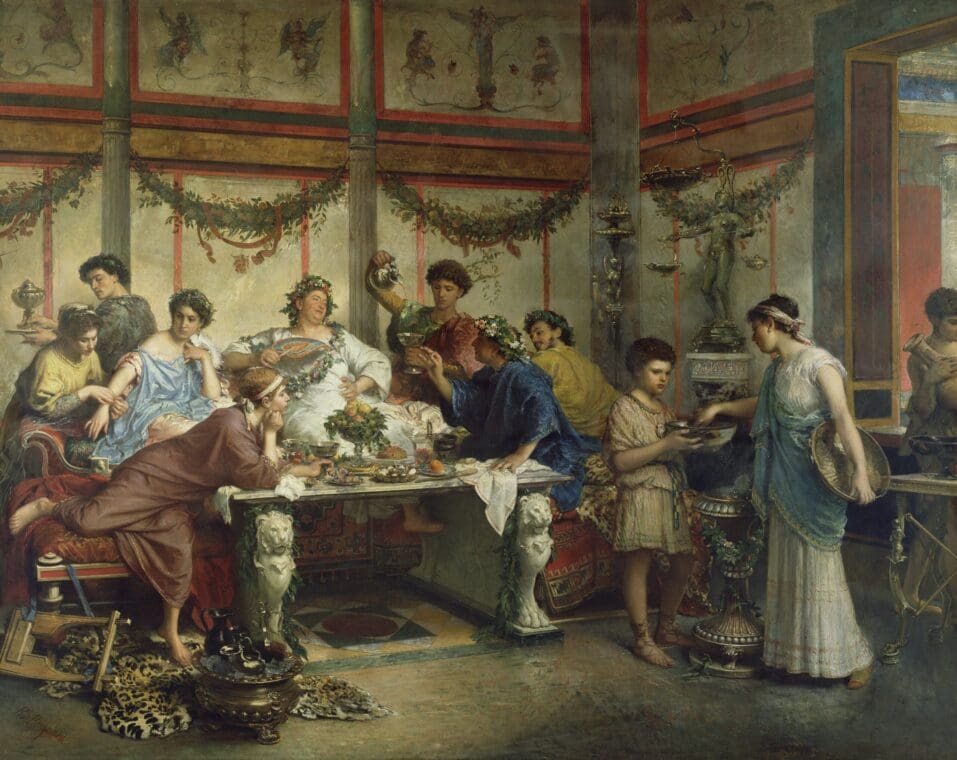
But December 25th was only the final day of more than a week of celebrations in Rome, known as Saturnalia, leading up to the Dies Natalis Solis Invicti, the birthday of the Sun. Beginning on December 17th, Saturnalia was marked by banquets, gatherings with family and friends, and a joyful suspension of everyday social rules – much like the Carnival traditions that later became part of the Christian calendar before Easter.
One particular feature of Saturnalia reveals an especially strong connection to our modern celebrations: the exchange of gifts. Just as we do today at Christmas, Romans would give presents to friends and relatives. Popular gifts included small clay figurines of gods, which were displayed on household altars. Some historians even suggest that this tradition may lie behind the later Italian custom of displaying the Nativity scene.

New Year’s Day was a very important date for the Romans, just as it is for us today. Originally, however, the Roman year did not begin on January 1st but in March. This was mainly because March was the month dedicated to Mars, the Roman god of war, who was also believed to be the divine father of Romulus, the founder of Rome. Due to extraordinary circumstances during wartime, the consul Quintus Fulvius Nobilior moved New Year’s Day to January 1st in 153 BC for the first time in history.
It was Julius Caesar, however, who permanently established the date with his Julian Calendar in 46 BC. The beginning of the year was dedicated to a very peculiar Roman god: Janus. According to mythology, Janus was the two-faced god of doors (his name comes from ianua, meaning “door” in Latin), as well as of beginnings and transitions. That is why the first month of the year, January, was named after him.
On New Year’s Day, Romans would process to the top of the Capitoline Hill, where priests sacrificed a white bull to ask the gods for protection in the coming year. The high priest, the Pontifex Maximus, would also offer Janus a pie made of flour, cereals, cheese, eggs, and olive oil in order to invoke the god’s benevolence.
After the rituals, people celebrated by feasting together and wearing something red, which was believed to bring good luck, health, and fertility.

Easter is a rather unusual Christian holiday because it does not fall on a fixed date like most other festivities. Instead, it follows the cycle of the moon and is celebrated on the first Sunday after the first full moon of spring. The Jewish roots of Easter are well known: the Christian feast is closely connected to Passover, which commemorates the Exodus of the Jews from Egypt.
However, many traditions associated with Easter reveal much older, pagan origins. The word “Easter” itself likely derives from Eostre, a Germanic goddess of spring. Symbols such as Easter eggs and the Easter bunny – traditionally said to bring sweets to children – were originally connected to Eostre as signs of fertility and rebirth.
But what about the Romans?
The Romans celebrated a spring festival around March 15th dedicated to Anna Perenna, a rather obscure goddess who was sometimes associated with the moon or with an Etruscan mother goddess. Most importantly, she was linked to the cycle of the year: her festival fell on what had originally been the first day of the Roman year.
The celebration of this pagan holiday usually involved meals shared with family and friends, often held in the woods sacred to the goddess. Romans would drink generous amounts of wine, since it was believed that each cup would extend their life by one full year. Because Anna Perenna was also associated with fertility and renewal, couples sometimes honored her by making love by the river.
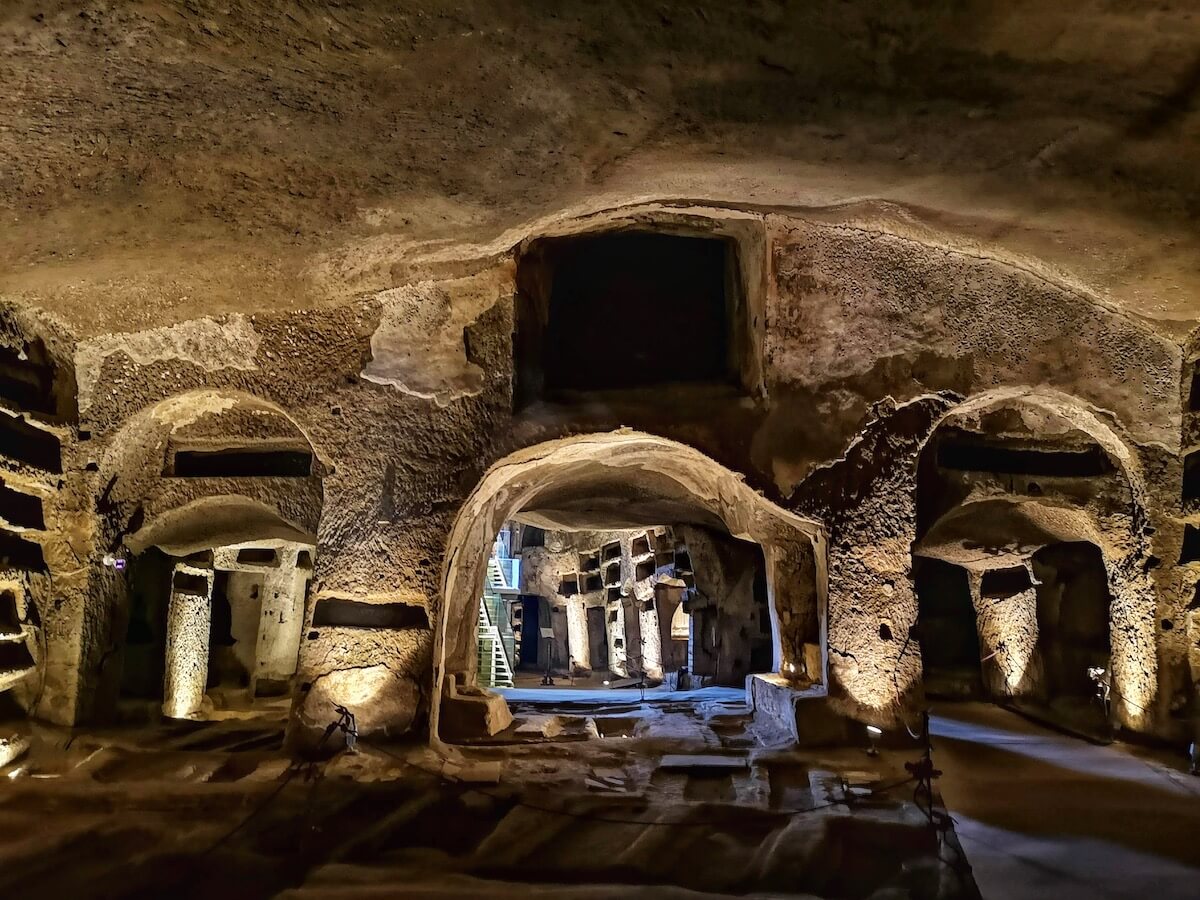
Mayn people are aware that Halloween traditions originated from the ancient Celtic festival of Samhain, but did you know that the Romans had something similar – and perhaps even creepier?
Today we have a single day dedicated to remembering the dead, November 2nd, but the Romans had several occasions throughout the year to reconnect with their departed loved ones. In February, for example, the period between the 13th and the 22nd was devoted entirely to honoring the dead. During these days, Romans visited tombs, brought offerings of food to the graves – a ritual known as Feralia, from the Latin fero, meaning “to bring” – and sometimes even shared a meal beside the grave to keep the deceased company.
It was also customary to leave black beans on the graves, which symbolized tears for the dead.
Romans believed that the dead occasionally needed to return to the world of the living in order to remain at peace. For this reason, on certain days the entrance of the Mundus – a deep pit believed to lead to the underworld – was opened so that spirits could pass between the two realms.

As most people know, Labor Day was officially established in 1894 to honor the labor movements and unions that fought to improve the working conditions of millions of workers. It seems like a very modern holiday – but the date itself had already been celebrated long before.
In ancient Rome, the first day of May – the Kalends of May – was dedicated to Maia, an ancient goddess associated with warmth, growth, and fertility. In fact, the entire month of May takes its name from her. Romans believed that Maia embodied the forces of nature that caused plants to grow and crops to flourish with the arrival of spring.
On this pagan holiday, a special sacrifice was offered in her honor. The Flamen of Vulcan, a priest connected to the god of fire, would sacrifice a pregnant sow to Maia, a powerful symbol of fertility and abundance. The ritual marked the warming of the earth and the renewal of agricultural life that defined the Roman spring.
The beginning of May was also associated with other springtime celebrations in Rome, including rites for Bona Dea, a mysterious goddess linked to fertility, healing, and the natural world. Her ceremonies, held on the Aventine Hill, were conducted exclusively by women and reinforced the strong connection between early May festivals and themes of renewal and life.
Interestingly, Maia herself was sometimes regarded as a kind of mother goddess. For this reason, after the Christianization of the Roman Empire, the Church gradually redirected the ancient celebrations of May toward another heavenly mother: the Virgin Mary. Even today, the month of May remains traditionally dedicated to Mary in many Catholic countries, where special devotions and processions still take place throughout the month.

Every January 6th, most Christian churches celebrate the feast of Epiphany, commemorating the visit of the Magi to the infant Jesus or, in some Eastern traditions, the day of Jesus’ baptism.
The customs associated with this holiday vary widely from country to country. Some traditions include special cakes such as the Three Kings Cake, blessing houses by marking doors with the initials of the Magi, or attending church services. In Italy, however, Epiphany is especially beloved by children thanks to a popular folklore figure: the Befana.
The Befana – whose name is actually a corruption of the word Epifania – is an elderly, witch-like woman who lives in the mountains. On the night before the holiday, she flies through the sky on a broomstick delivering small gifts, usually sweets, to well-behaved children. Naughty children, on the other hand, receive only coal – although today the coal is usually made of sugar.
But who is the Befana really?
According to Italian folklore, she was the woman who helped point the Magi toward Bethlehem. Yet if we look further back to Roman times, we find traditions that may explain her deeper origins.
Romans believed that during the twelve nights following the winter solstice, the moon goddess Diana, accompanied by the deities Satia and Abundantia – personifications of satisfaction and abundance – flew across the fields to bless them with fertility. The passing year itself was sometimes imagined as an old woman, perhaps representing Mother Nature. Before dying, she would give one final gift of seeds and food to the people as a promise that she would return again in spring.
According to some traditions, she also brought coal; not as punishment, but as a symbol of warmth and renewal.

Saint John the Baptist holds a few remarkable distinctions among the saints. Not only is he one of the most frequently represented figures in the history of religious art, but he is also the only saint traditionally celebrated on the day of his birth rather than his death.
John is indeed a special figure, as he prepared the way for Jesus, who was also his cousin. Just as the birth of Jesus on December 25th coincides with the rebirth of the sun after the winter solstice, the feast of Saint John on June 24th falls near the summer solstice, when the days begin to shorten again.
Saint John’s Eve is one of the oldest Christian celebrations, observed on this date since at least the 4th century. Across Europe, the festival includes a variety of traditions: special homemade dishes such as the Irish Goody, large bonfires, and the gathering of herbs – especially St. John’s Wort, believed to ward off evil spirits.
But what did the Romans do at this time of year?
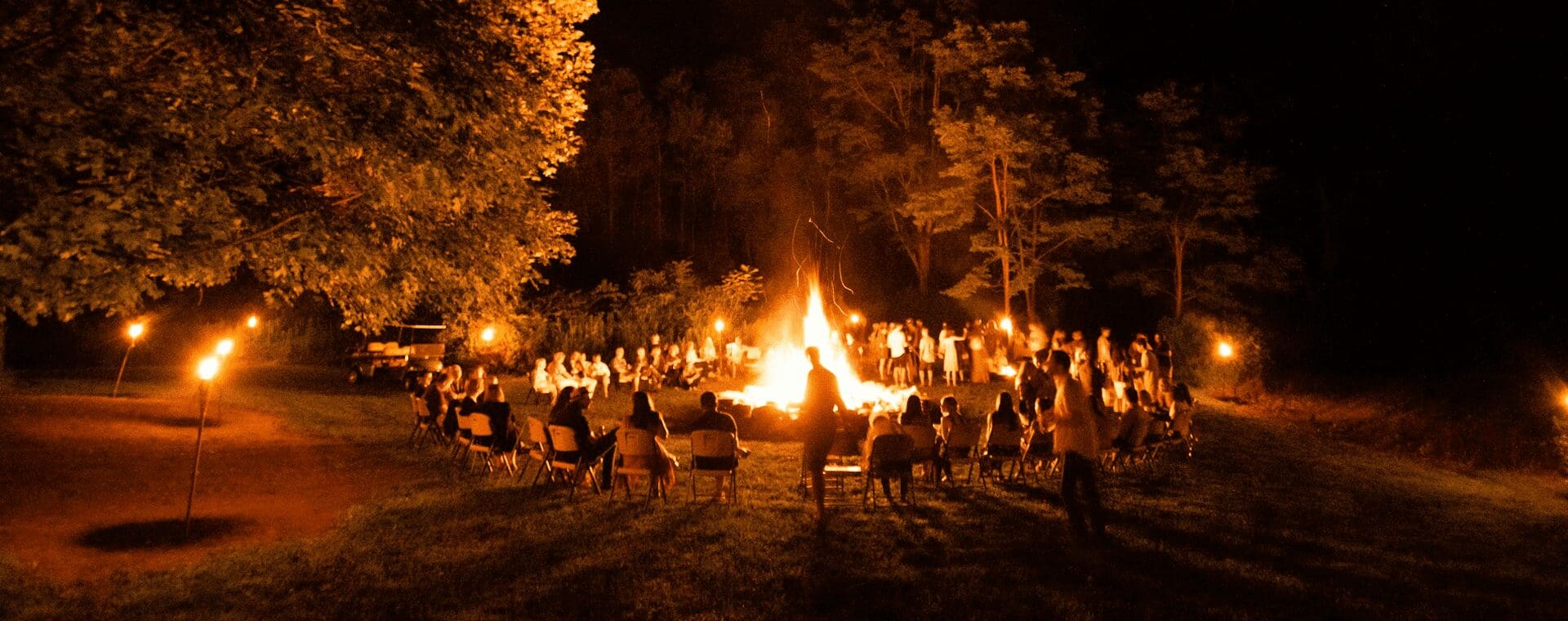
On the night of June 24th, Romans gathered around bonfires in the countryside, dancing, feasting, and drinking in honor of Fortuna, the goddess of luck. Fortuna was particularly beloved among the poorer classes, who constantly tried to win her favor through offerings and sacrifices in the hope that she might grant them better fortune. Yet she was famously unpredictable – a goddess whose favor was never easy to secure.

What are the main pagan holidays?
Many ancient pagan festivals were tied to the cycles of nature, especially the solstices, equinoxes, and agricultural seasons. In the Roman world, major celebrations included Saturnalia in December, festivals for the sun god such as Dies Natalis Solis Invicti, spring festivities honoring renewal and fertility, and numerous rituals connected to the dead. Many of these traditions later influenced holidays we still celebrate today, including Christmas, New Year’s Day, and midsummer festivals.
Is Christmas a pagan holiday?
Christmas is a Christian holiday celebrating the birth of Jesus, but its date and some traditions overlap with earlier pagan festivals. In the Roman Empire, December was already a festive period because of Saturnalia and the celebration of Dies Natalis Solis Invicti, the “Birthday of the Unconquered Sun,” on December 25. When Christianity became the official religion of the empire, the Church placed Christmas on the same date, making it easier for people to transition from older traditions to the new Christian celebration.
What pagan holiday is Easter based on?
Easter has strong Christian roots connected to the Jewish festival of Passover, commemorating the resurrection of Jesus. However, some symbols associated with Easter—such as eggs and rabbits, representing fertility and new life—likely come from earlier springtime traditions linked to pagan celebrations of renewal. The English word “Easter” itself may derive from Eostre, a Germanic goddess of spring.
Why did pagan holidays survive after Christianity spread?
When Christianity spread through the Roman Empire, many traditional festivals were adapted rather than eliminated. By placing Christian celebrations on the same dates as older pagan ones, the Church allowed people to keep familiar moments in the calendar while gradually changing their meaning. Over time, the original pagan context faded, but many customs—feasting, gift-giving, bonfires, and seasonal rituals—continued in new forms.
The story of pagan holidays is a reminder that traditions rarely disappear – they simply evolve. Beneath many of the celebrations we enjoy today lie customs that stretch back thousands of years, to the rituals, festivals, and seasonal rhythms of the ancient world. Once you start looking for them, traces of these pagan holidays appear everywhere: in the timing of our festivities, the symbols we use, and the ways we gather with family and friends.
If you find the history of pagan holidays fascinating, the best place to explore it further is in the places where these traditions first took shape. On our guided tours, we dive deeper into the stories of ancient Rome – its gods, festivals, and everyday rituals – bringing the past vividly to life as you walk through the very spaces where these celebrations once unfolded. Join us to discover how the ancient world still shapes the traditions we celebrate today!
Explore Our Rome Itineraries

More From Our Travel Guides